
A spiritual strategist restoring cultural infrastructure from the inside out.

Presented by Group 6-22
– | Little Rock, AR
Transformational voices convening to think differently about everything that matters.
View 2026 Event
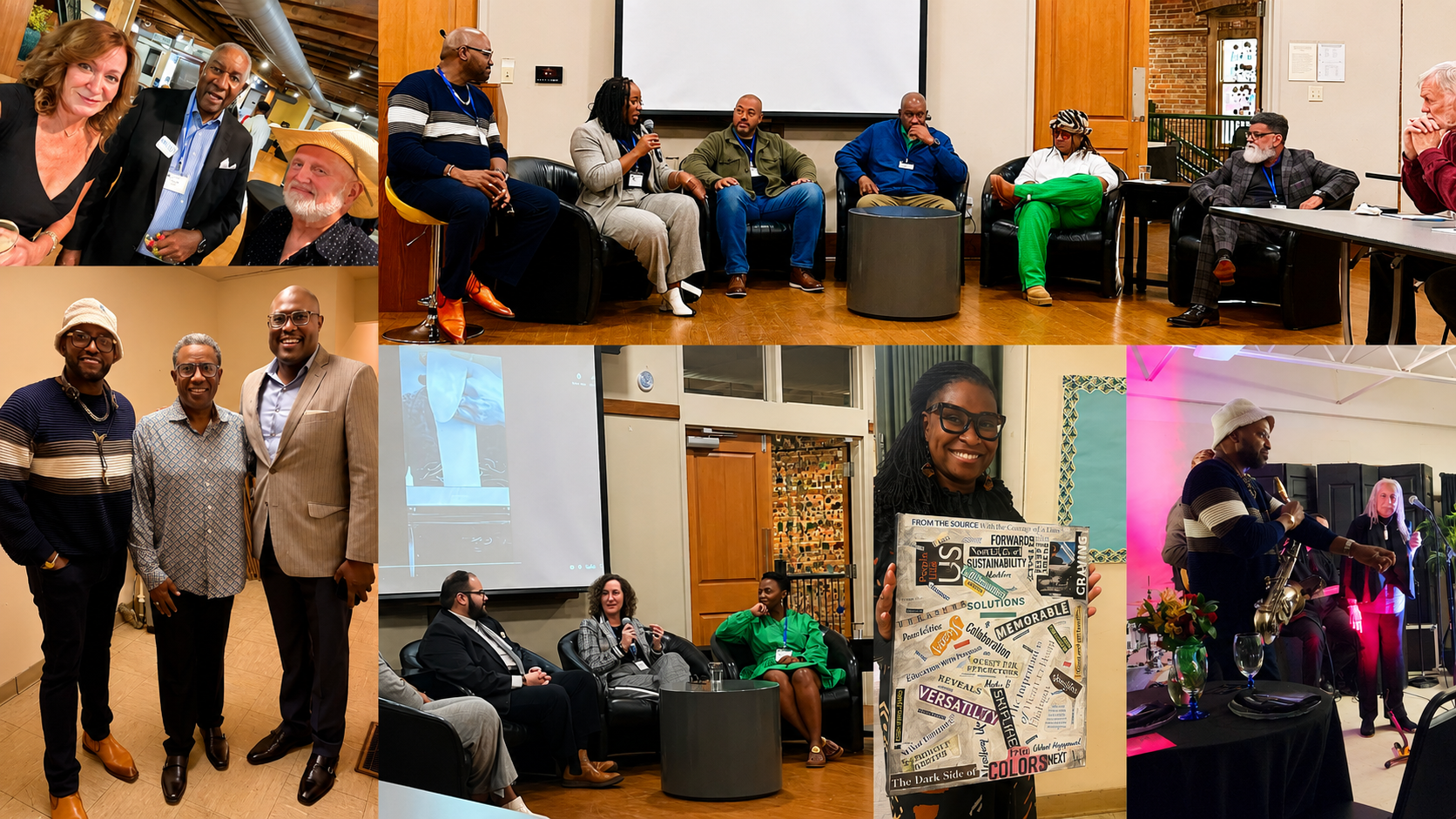
There is a particular kind of gathering that is not a conference.
It does not open with a keynote designed to set the room's temperature from the front. It does not run sessions that funnel the audience toward predetermined conclusions. It does not produce a highlight reel you forget by the time you reach the parking garage. What it produces — if it works — is harder to name and impossible to fake.
It produces a room that already knows something before anyone has said it.
That is what happened in Little Rock, Arkansas on October 23rd and 24th, 2025, when Group 6-22 convened The Convergence for the first time.
The people in that room were not strangers to difficult work. They came from Madison and Detroit, from pulpits and courtrooms, from recording studios and community centers. They brought disciplines that do not usually find themselves at the same table: law and art, theology and economic theory, civic strategy and ancestral memory.
What they found, arriving the evening before the main event, was that the design of the gathering had already begun the work.
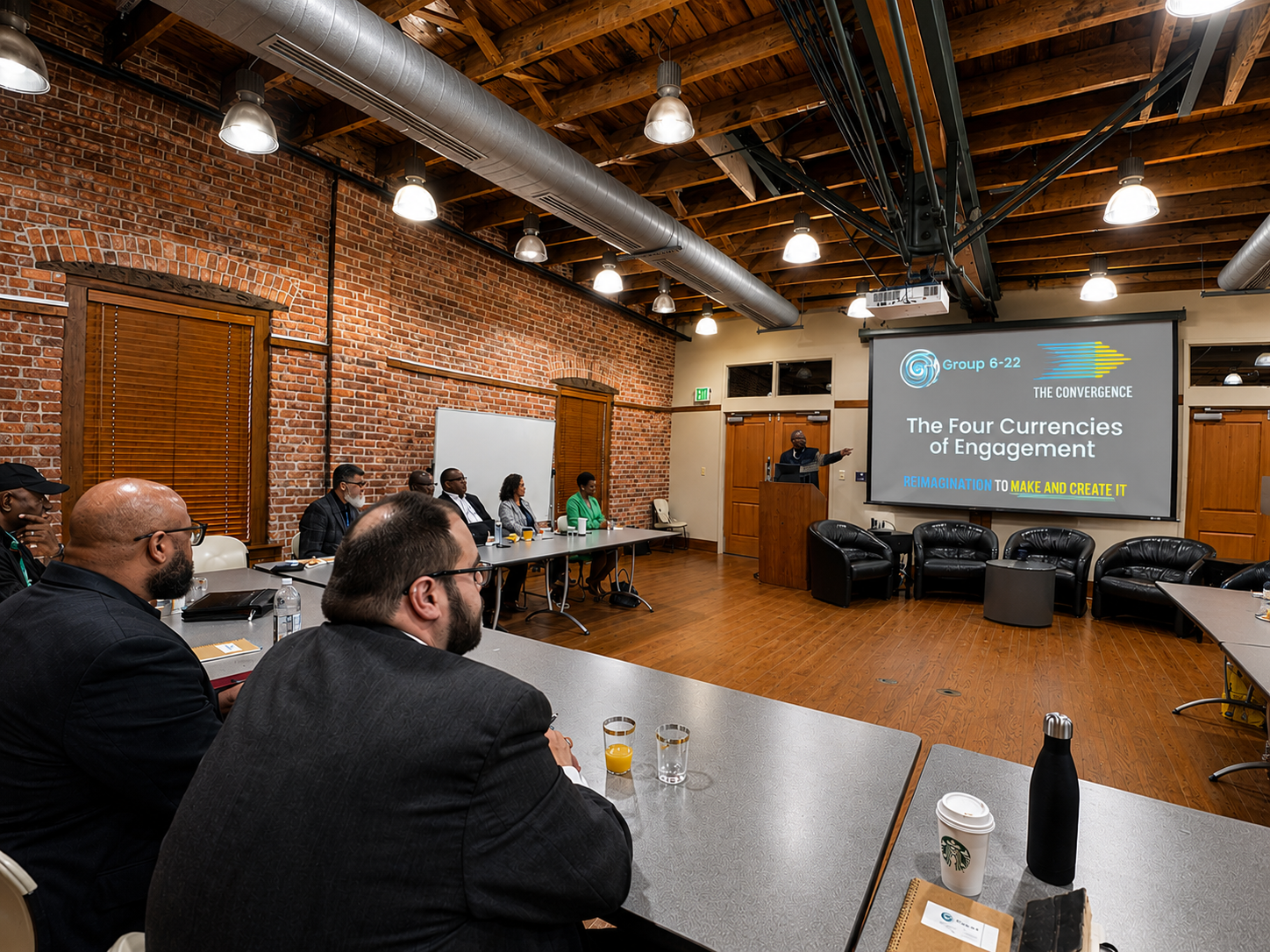
The Economy of Being™ holds that human presence itself is value — and that it moves through a specific sequence: Time first, then Attention, then Relationship, then Money. The design of The Convergence was built around that sequence. The reception the evening before was not preamble. It was the first movement.
"It was great to have that reception space," said Rev. Dr. Alexander Gee, founder of the Center for Black Excellence and Culture in Madison, Wisconsin, "so that I feel like I know the space and the participants when it was time to present today — rather than just coming in cold."
That was not an accident of hospitality. That was architecture.
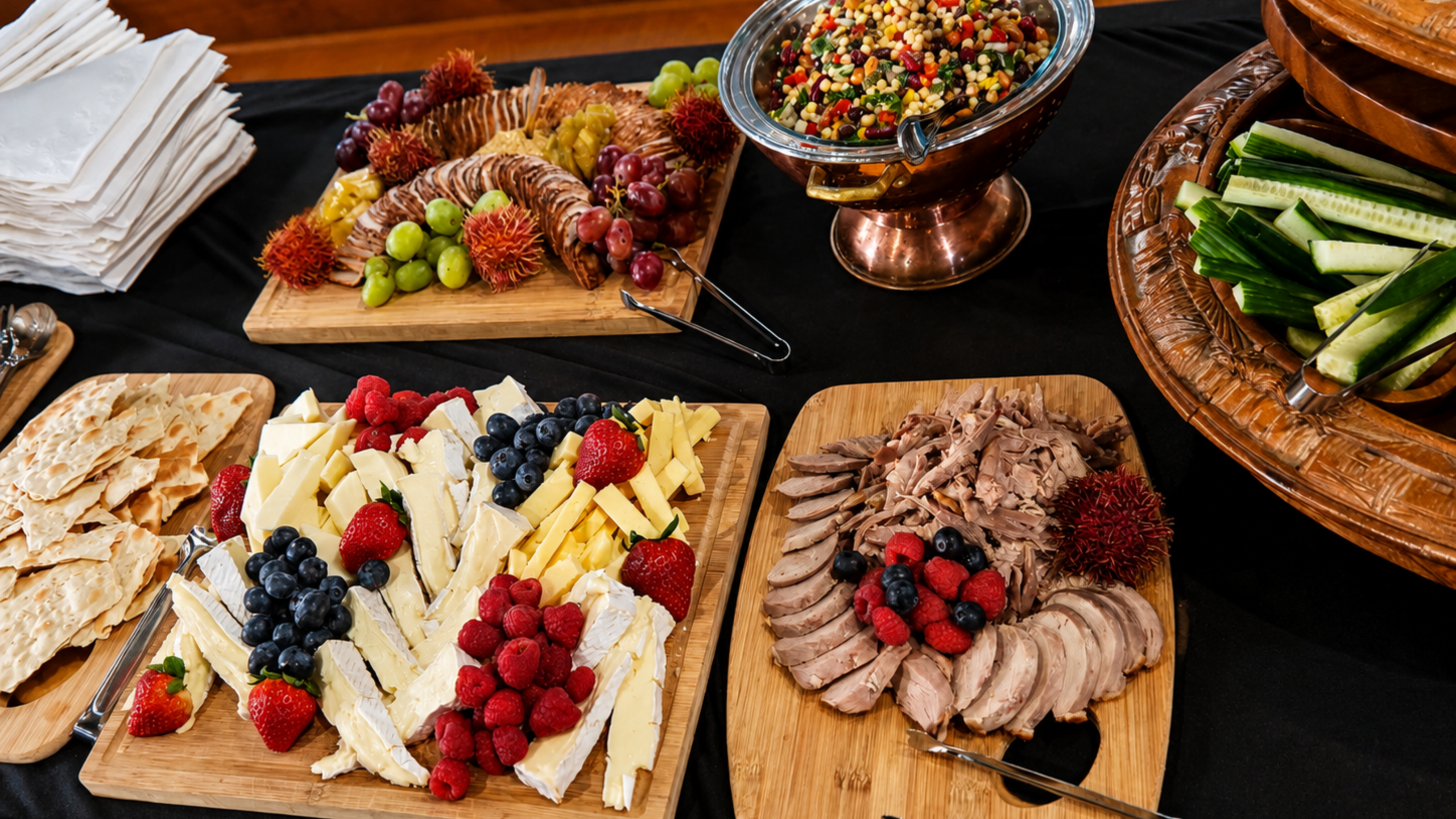
Before The Convergence had a name, it was a dinner table.
Sunday nights. Chef Cynthia East-Malik cooking. MarQuis Devon Hunt prompting the room. Families, strangers, neighbors sitting together long enough to become something else. Over ninety consecutive Sunday evenings. Three thousand dollars in outside capital. What that table generated — in trust, in restored agency, in the invisible architecture of genuine relationship — cannot be accounted for on a conventional balance sheet.
At The Convergence, the table came with the room. The Healing Table was not a metaphor. It was a meal.
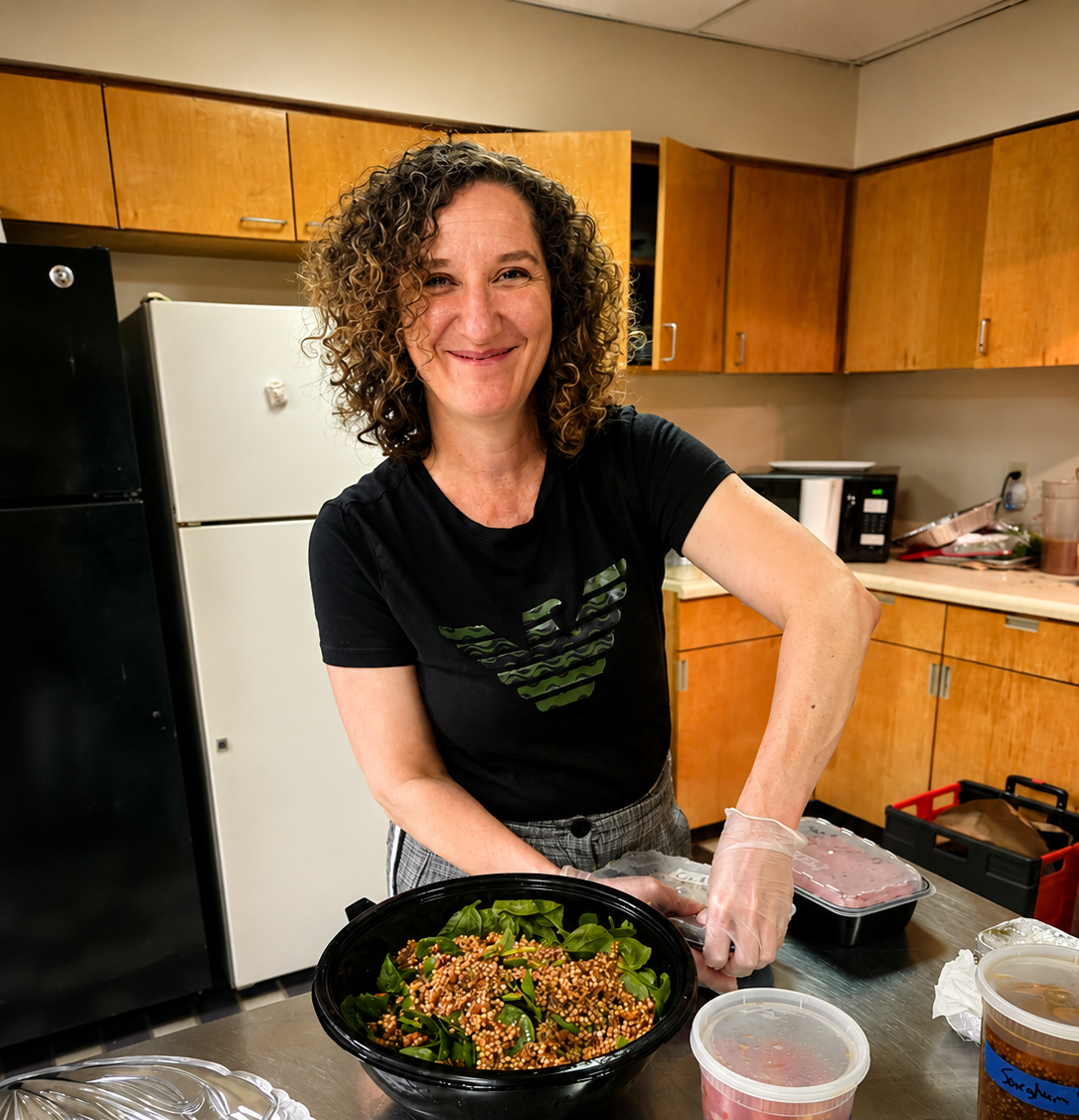
Dana Downes, who has sat at that table for years, said: "I always go home after the evening is over with and I'm like — so filled. It's like my cup is like up here."
She was not speaking of content. She was speaking of the particular fullness that comes from being genuinely seen in a room of people who also see each other. That fullness is not an amenity. It is the point.
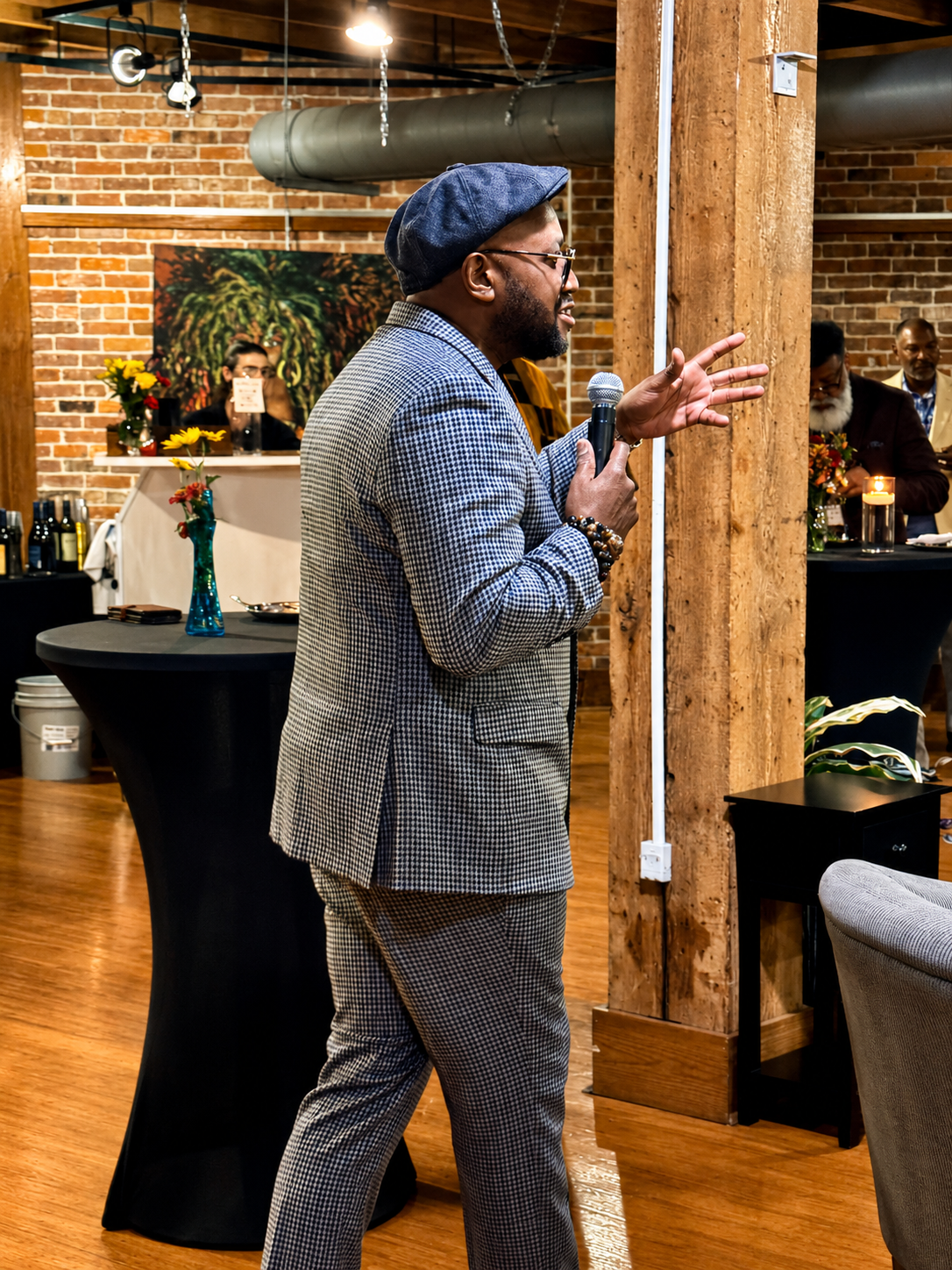
Judge Wendell Griffen — pastor, retired judge, CEO of Griffen Strategic Consulting — named what the room was doing in a single sentence.
"Thought leaders that are brought together in the black prophetic progressive radical tradition rarely get together in times when we can be comfortable with each other. Often we are brought together because we are challenging something, responding to something. Rarely we come together to converse, engage in collegial discourse, imagine together, and commiserate without being miserable."
— Judge Wendell Griffen
Rarely.
That word is the wound and the diagnosis. The thinkers, builders, and architects who could most benefit from genuine communion are most consistently called to gather only when something has already gone wrong. They arrive not to imagine but to respond. Not to build but to defend. The creative surplus that lives in such people — the surplus that wants to be spent on design rather than repair — goes unspent.
The Convergence was built to spend it.
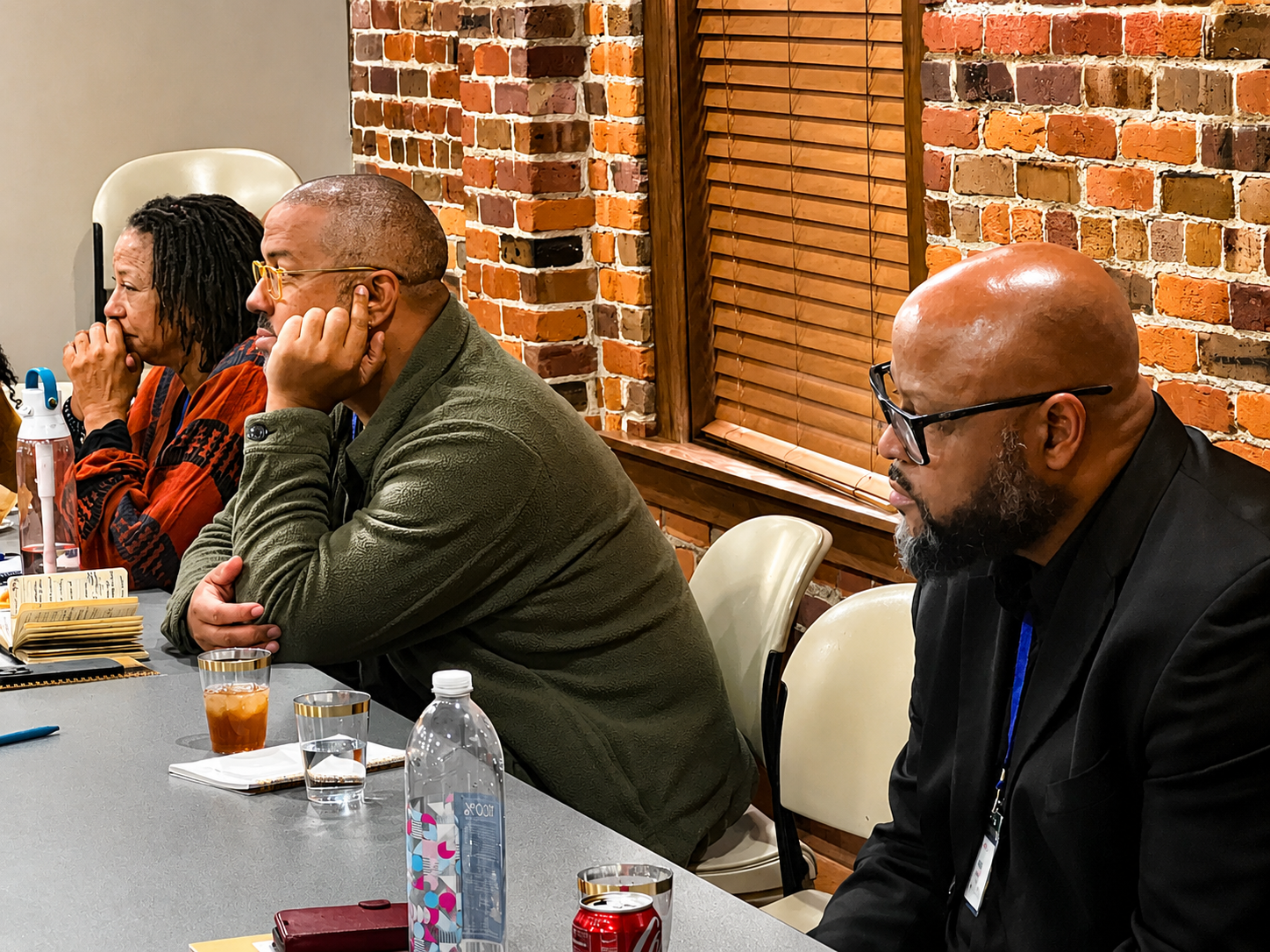
The day unfolded as one continuous arc of inquiry — not a sequence of sessions but a single conversation that kept deepening. Eight panels. Eight entry points into the same question: what does it cost a culture when it transacts in money alone, and what becomes possible when it learns to read the full ledger?
Kevin Anthony Johnson — executive coach, author, and transformer who drove fourteen hours to be there — said it plainly:
"When there's collective wisdom to be heard, someone needs to witness it and metabolize it and take it somewhere and do something with it."
— Kevin Anthony Johnson
He had arrived already carrying a Buckminster Fuller line about not overthrowing systems but creating new ones that make the old systems obsolete. At The Convergence, those conversations began to imagine exactly that — a system that doesn't require extraction to function.
Emmy-nominated artist and community builder Dazzmin "King Honey" Murry added:
"I believe that they've carefully curated that room in a way that is impactful on its own."
— Dazzmin "King Honey" Murry
She was talking about the delegates — the word Group 6-22 uses for its participants, and the choice is intentional. Delegates carry something on behalf of a larger body. They are not spectators. They represent something that could not fully attend.
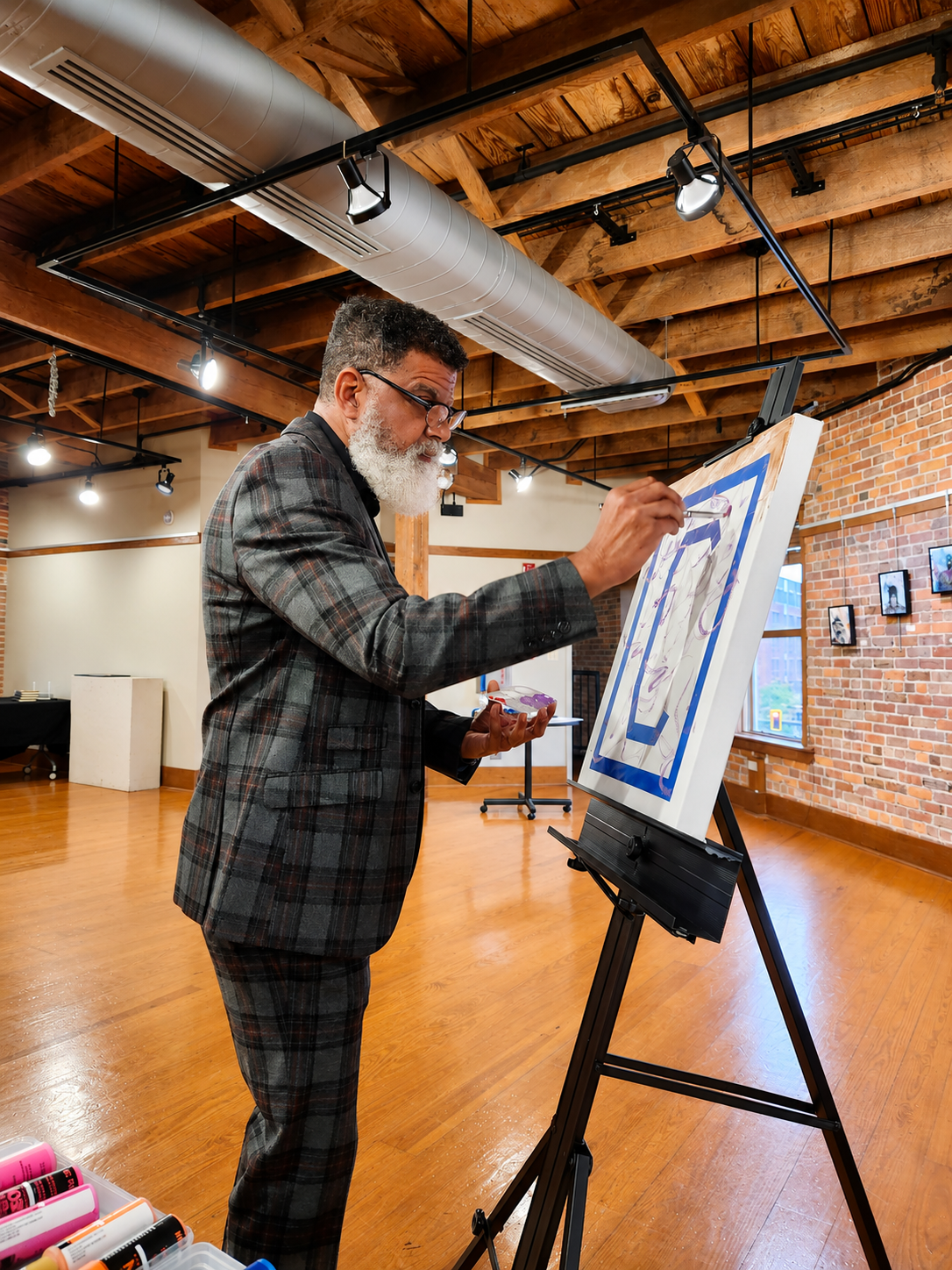
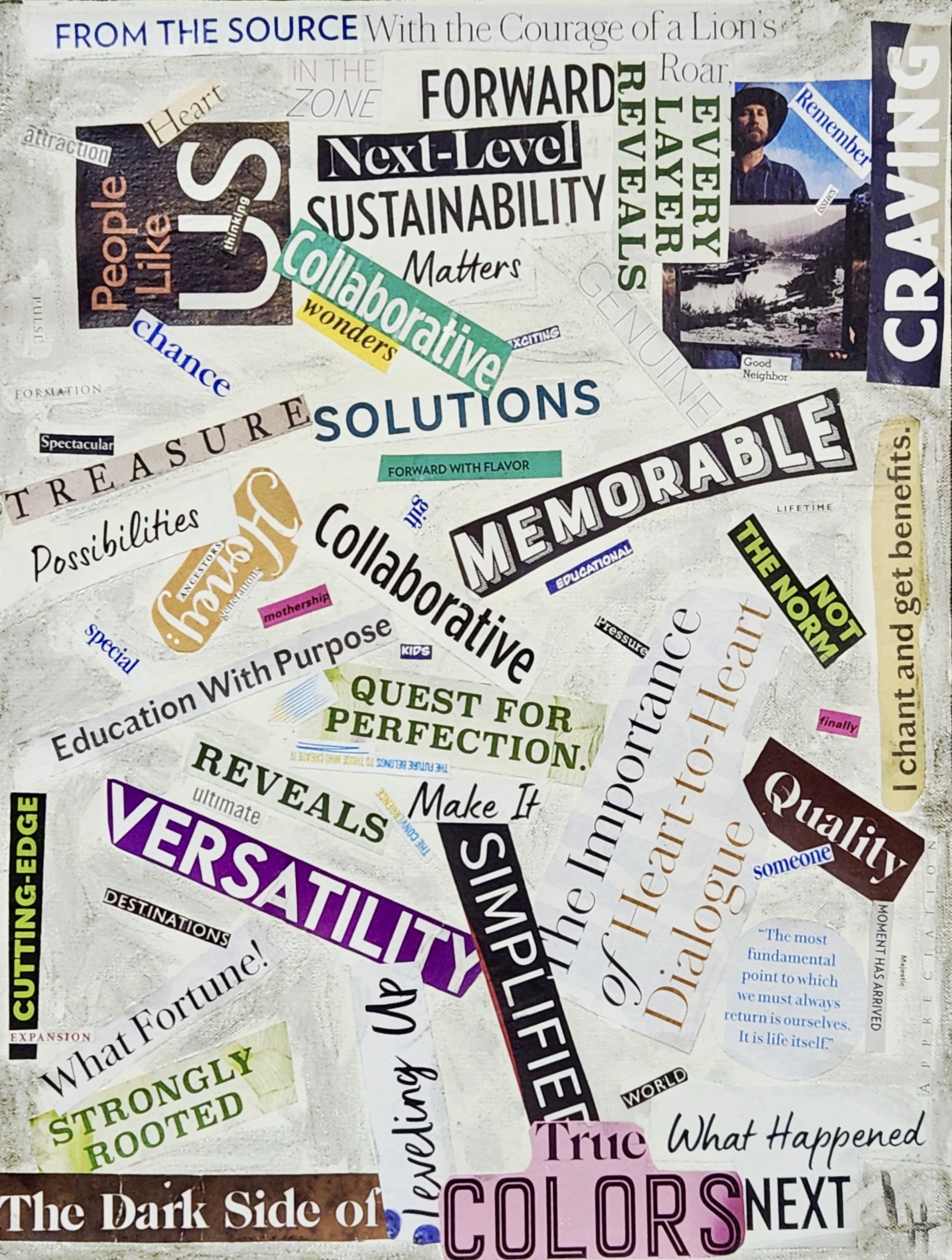
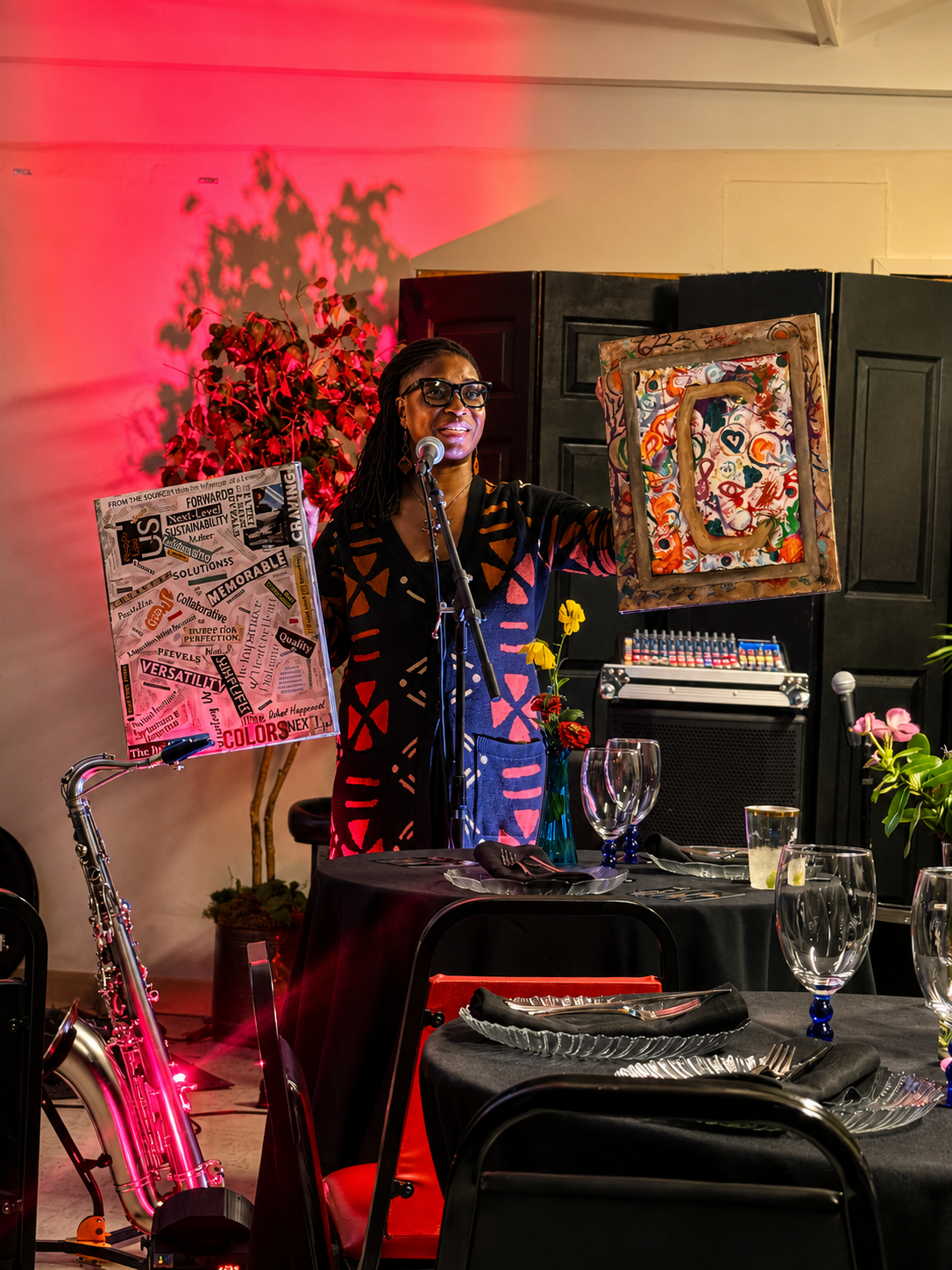
The canvases were worked on throughout the day — each mark a record of presence.
The art at The Convergence was not décor. It was documentation. Two collaborative works emerged from the room itself — one built from words, one from paint. Both carried the same premise: that presence leaves a mark, and that mark belongs to the people who made it.
Rev. Dr. Alexander Gee named what that kind of space makes possible:
"When you have that type of atmosphere — not being physical, but being communal and being cultural — it creates this atmosphere that serves as a Muse."
— Rev. Dr. Alexander Gee
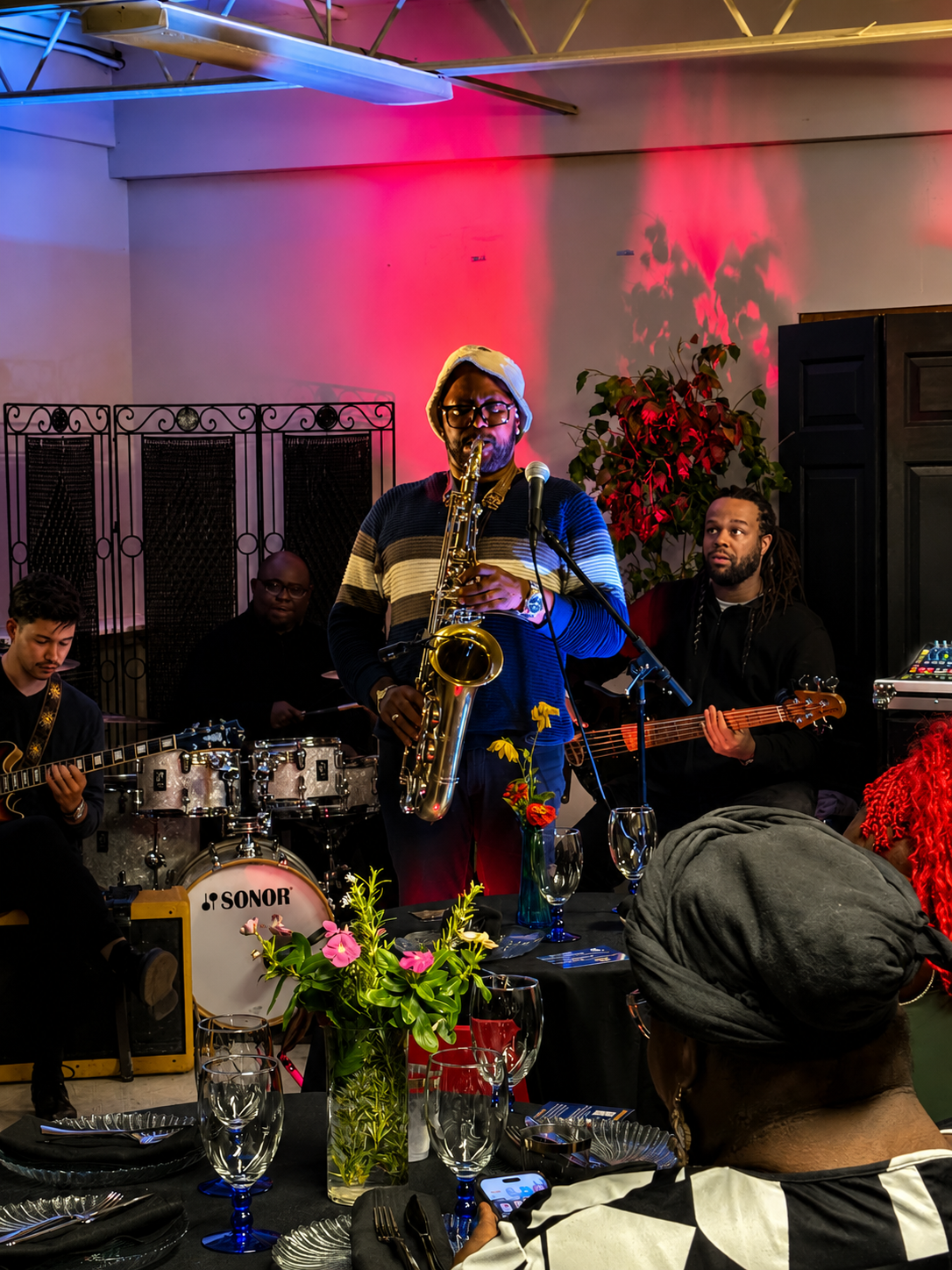
The evening ended in music. Not as entertainment. As completion.
The Economy of Being™ moves through a sequence — Time, Attention, Relationship, Money — and when the sequence is honored, what emerges is coherence. What UnMuted demonstrated is what coherence sounds like when it has a horn section.
Judge Wendell Griffen, who has lived long enough to know the difference between an idea and an idea whose time has come, called it exactly that.
"An idea whose time has come."
What The Convergence demonstrated — what its delegates witnessed and took with them — is that when you build the architecture correctly, the room generates something that outlasts the room. The conversations that began in Little Rock on October 23rd continued in Madison, in Detroit, in recording studios and community centers and private practices and pastoral offices. Not because they were assigned to. Because that is what happens when the sequence is honored.
The room knew something. Before anyone said it.
The Convergence returns.
October 28–30, 2026 · Little Rock, Arkansas
Learn About The Convergence 2026The delegates who helped shape The Convergence 2025 through conversation, inquiry, imagination, and presence.
A spiritual strategist restoring cultural infrastructure from the inside out.

A guide for those unlearning inherited rhythms and leading from embodied clarity.

Arkansas-rooted clinician and Army veteran integrating a biopsychosocial lens in practice and consulting, advocating for disability rights and veterans, mentoring new clinicians, and building cultures that heal and thrive.

Cultural architect of Group 6-22, stewarding frameworks of presence, authorship, and the Economy of Being.

A culinary educator and cultural host, centering food as portal, presence, and practice for transformation.

A seasoned voice in economics and social justice, shaping leadership and community transformation.

Tax attorney & educator advancing access to justice through clinical practice, mentorship, and ethical leadership.

Ubuntu-rooted chaplain and scholar linking healing, justice, and resilient community.

Higher-education strategist advancing belonging and excellence through leadership, organizational design, and equity-centered practice.

Gastroenterologist and interfaith advocate bridging medicine, pluralism, and human rights across cultures and traditions.

Veteran, pastor, retired state court judge, writer, and activist concerning faith, justice, and peace.

Emmy-nominated multidisciplinary artist and ecosystem builder bridging creativity, culture, and social impact.

Culture-forward operator shaping Arkansas dining and events through service excellence and community leadership.

Global storyteller shaping bridges through language, culture, and restorative communication.